



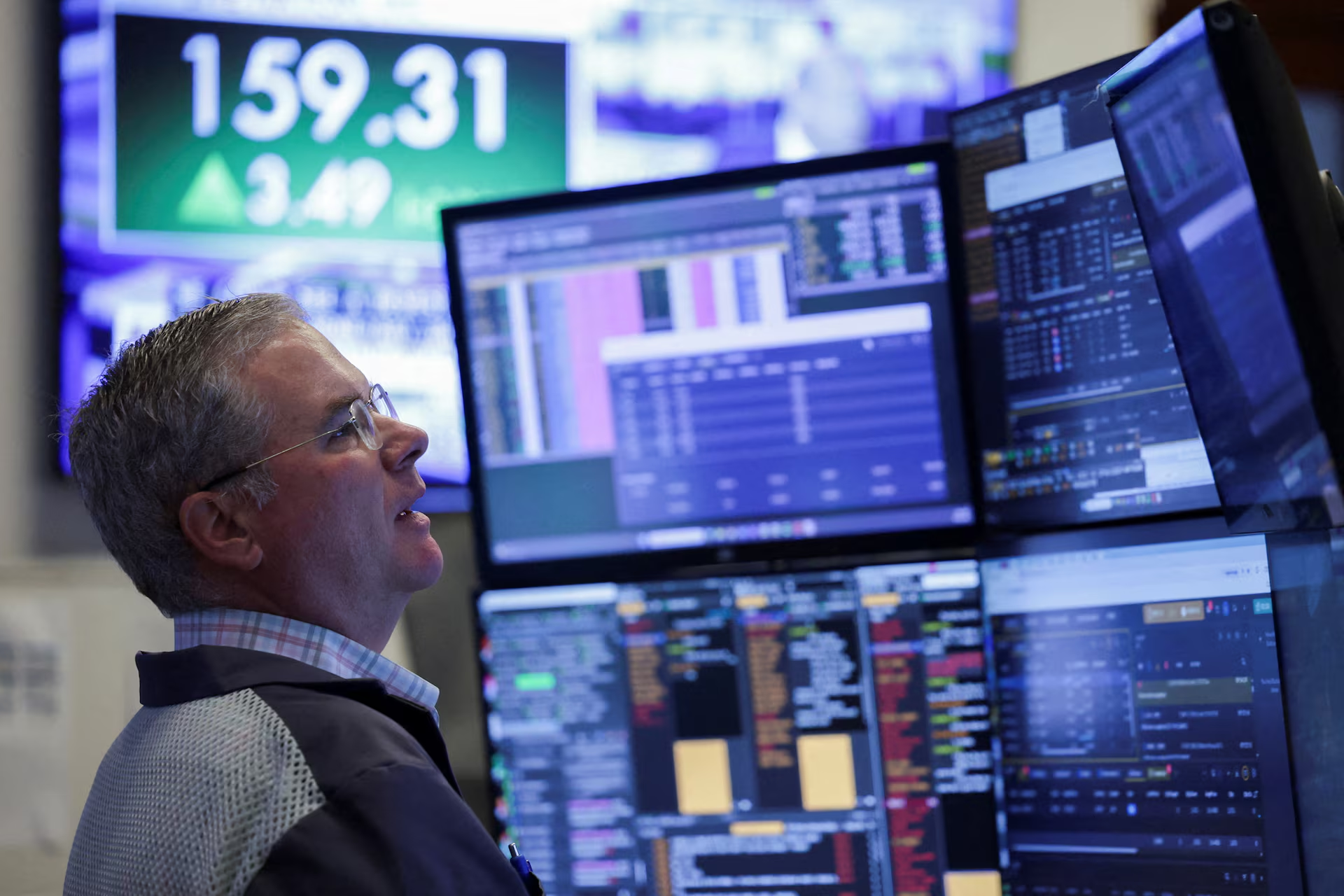
The U.S. stock market is witnessing a powerful resurgence in 2026, driven by a combination of artificial intelligence (AI) optimism, stronger-than-expected corporate earnings, and a growing sense of urgency among investors. After a volatile start to the year marked by geopolitical tensions and market pullbacks, capital is flowing back into equities—particularly technology stocks—as fear of missing out (FOMO) becomes a dominant market force.
Market Rebound: From Fear to Opportunity
Earlier in 2026, global markets faced significant pressure due to geopolitical instability, including tensions involving Iran, which triggered concerns about inflation and energy supply disruptions. These fears contributed to a sharp sell-off, with the S&P 500 falling around 8% at one point.
However, recent diplomatic developments and easing tensions have restored investor confidence. U.S. equities have rebounded strongly, with the S&P 500 rising approximately 11% and the Nasdaq gaining nearly 18% from their lows.
This rapid recovery has caught many investors off guard—especially those who had moved to the sidelines during the downturn. Now, as markets climb, they are rushing back in, unwilling to miss further gains.
AI Boom: The Core Driver of Market Momentum
Artificial intelligence continues to be the central theme powering this rally. Major tech companies are investing heavily in AI infrastructure, data centers, and advanced computing systems. These investments are not only fueling innovation but also delivering tangible earnings growth.
Analysts highlight that AI-related spending is accelerating at an unprecedented pace. Hyperscalers such as Amazon, Microsoft, and Google are projected to collectively spend hundreds of billions of dollars on AI infrastructure in 2026 alone.
This surge in investment is creating a ripple effect across multiple sectors:
- Semiconductor companies are benefiting from rising demand for AI chips
- Data center providers are expanding capacity rapidly
- Energy and materials sectors are gaining from infrastructure buildouts
The result is a broad-based rally led by AI-driven growth expectations. As Nasdaq Composite reaches new highs, investors are increasingly convinced that the AI trade is far from over.
Earnings Growth Reinforces Bullish Sentiment
While AI excitement is a key narrative, strong corporate earnings are providing the fundamental support behind the rally. Companies across sectors have reported better-than-expected results, reinforcing confidence in the economic outlook.
Projections for 2026 earnings growth have climbed significantly, with estimates approaching 20%.
This combination of solid earnings and future growth expectations is critical. Unlike speculative bubbles of the past, many of today’s leading companies are generating real profits and cash flows. This has helped justify higher valuations—at least for now.
As one major takeaway, the current rally is not purely hype-driven; it is grounded in improving business performance, especially within technology and AI-related industries.
Fear of Missing Out (FOMO) Takes Hold
Perhaps the most defining feature of the current market environment is the psychological shift among investors. After initially hesitating, many are now re-entering the market due to FOMO.
Evidence of this trend can be seen in the surge in options trading activity. Investors are increasingly buying call options—bets that stocks will rise—indicating growing bullish sentiment.
Retail investors are also returning in large numbers, particularly in high-growth tech stocks. The rapid rise in prices is creating a feedback loop:
- Rising stocks attract more investors
- More buying pushes prices even higher
- This further intensifies FOMO
Institutional investors are not immune either. Reports suggest one of the largest shifts in investor positioning toward equities since 2010.
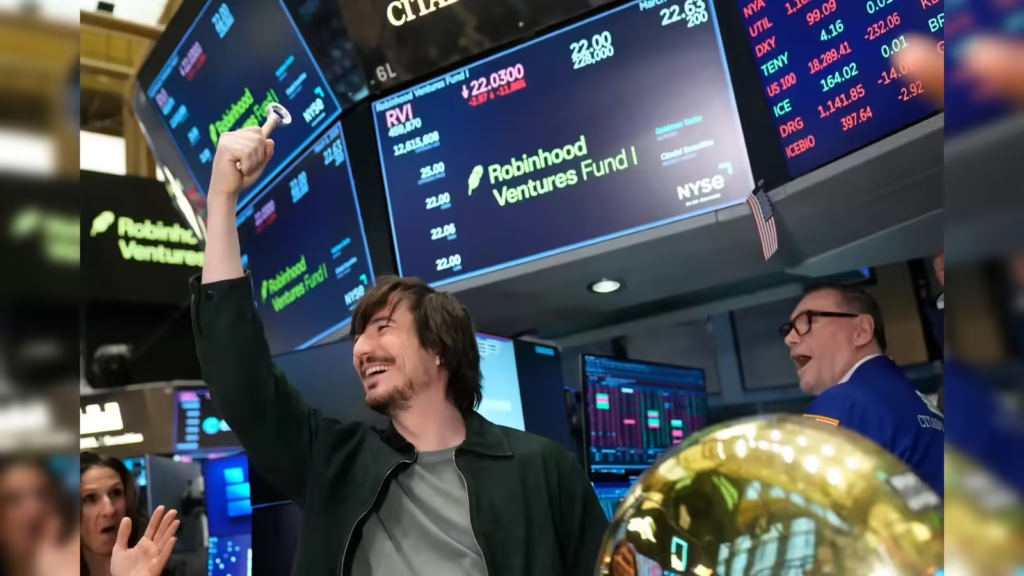
Sector Divergence: Winners and Losers in the AI Era
Despite the overall bullish trend, not all sectors are benefiting equally. The AI revolution is creating clear winners and losers within the market.
Semiconductor and hardware companies are outperforming, driven by demand for AI infrastructure. For example, chipmakers have seen significant gains as data center expansion accelerates.
On the other hand, some traditional software companies are facing pressure. Concerns that AI could disrupt existing business models have led to declines in certain software stocks.
This divergence highlights a key shift in the market:
- Infrastructure providers (chips, cloud, data centers) → gaining
- Legacy software models → facing disruption risks
Investors are increasingly rotating capital toward sectors that directly benefit from AI adoption.
Is This Sustainable or a Bubble?
While optimism is high, not everyone is convinced that the rally is sustainable. Some analysts warn that the market may be entering bubble-like territory, where AI hype is overshadowing broader economic risks.
Critics argue that investors are ignoring factors such as inflation, geopolitical uncertainty, and potential overvaluation.
There are also concerns about the long-term return on massive AI investments. If companies fail to translate spending into real productivity gains, valuations could come under pressure.
However, others believe the current cycle is fundamentally different from past bubbles like the dot-com era. Today’s leading tech firms are profitable, cash-rich, and deeply integrated into the global economy.
This debate—bubble vs. sustainable growth—remains one of the most important questions for investors in 2026.
The Road Ahead: Momentum with Caution
Looking forward, the outlook for U.S. stocks remains positive but uncertain. Key factors that will shape the market include:
- Continued AI investment and innovation
- Corporate earnings performance in upcoming quarters
- Geopolitical developments and policy decisions
- Interest rate trends and inflation dynamics
Major financial institutions have even raised their market targets, citing strong AI momentum and earnings growth as key drivers.
However, risks remain. Any slowdown in earnings, escalation in global tensions, or disappointment in AI returns could trigger volatility.
Conclusion
The return of investors to U.S. stocks in 2026 reflects a powerful mix of optimism, opportunity, and urgency. AI is at the heart of this resurgence, driving both earnings growth and long-term expectations. At the same time, strong corporate results are providing the fundamental backing needed to sustain the rally.
Yet, the growing influence of FOMO suggests that psychology is playing an increasingly important role. Markets are not just being driven by data—they are being driven by emotion.
As the rally continues, investors must balance excitement with caution. The opportunities presented by AI are enormous, but so are the risks. Whether this marks the beginning of a long-term bull market or the buildup to another correction will depend on one key factor: whether AI can deliver on its promise of real, sustainable economic value.