



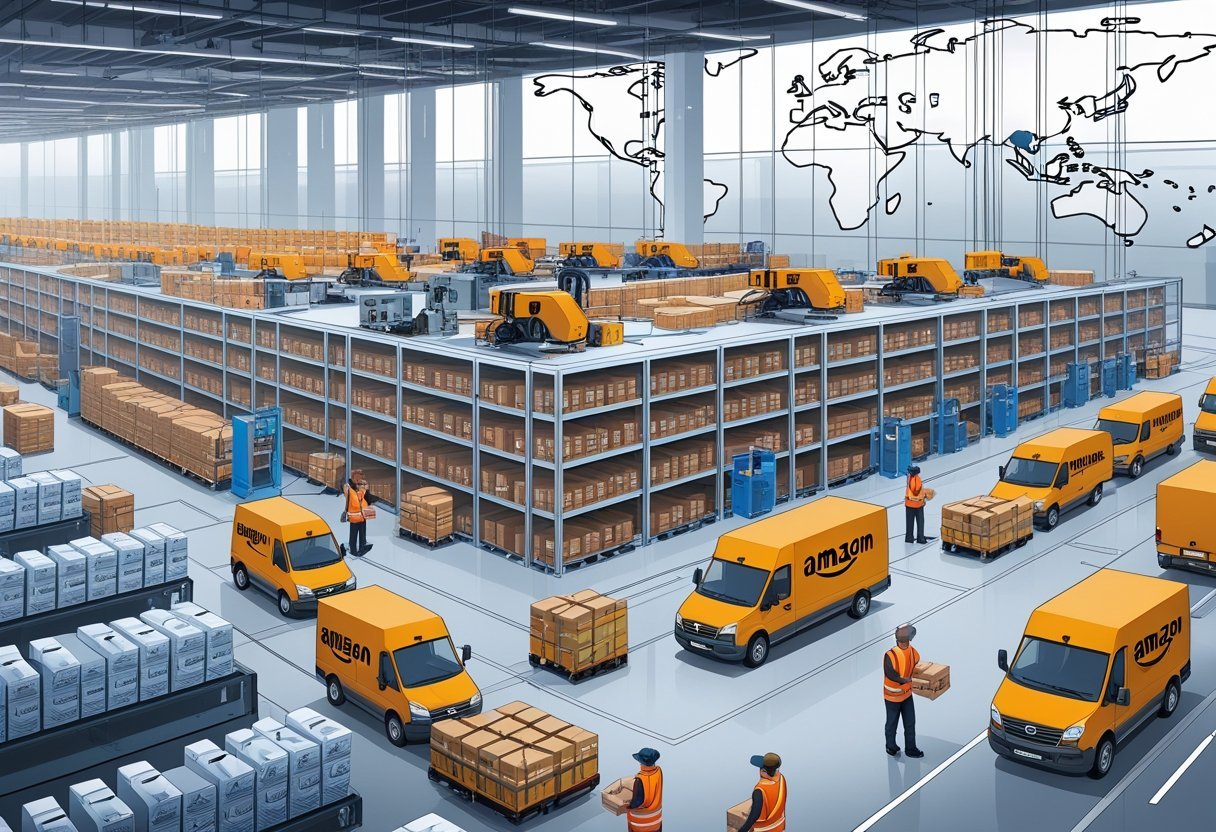
In a major strategic shift that could reshape the global logistics and e-commerce landscape, Amazon has announced that it is opening its vast logistics infrastructure to external businesses. This move marks a significant evolution in the company’s business model—transforming its once internal supply chain into a full-scale service offering for companies across industries.
The initiative, called Amazon Supply Chain Services (ASCS), signals Amazon’s ambition to become a dominant force not just in e-commerce, but in the broader logistics and supply chain industry.
A New Era: Logistics as a Service
For decades, Amazon has quietly built one of the most sophisticated logistics networks in the world. Originally designed to support its own retail operations and marketplace sellers, this infrastructure now includes:
- Hundreds of fulfillment centers and sorting hubs
- A fleet of over 100 cargo aircraft
- Advanced inventory forecasting systems
- Last-mile delivery capabilities
With ASCS, Amazon is now offering all these capabilities to businesses of any size—not just those selling on its platform. Companies can now store, move, and deliver goods from raw materials to finished products using Amazon’s infrastructure.
This effectively transforms Amazon into a third-party logistics (3PL) provider, placing it in direct competition with global shipping giants.
Competing with Logistics Giants
Amazon’s move puts it head-to-head with established players like FedEx and UPS, as well as global freight companies like DHL.
The scale of Amazon’s infrastructure gives it a unique advantage. Its ability to combine warehousing, transportation, and last-mile delivery under one integrated system allows for faster delivery times—often within two to five days—and potentially lower costs.
Financial markets reacted quickly to the announcement, with shares of FedEx and UPS dipping shortly after the news broke—highlighting investor concerns about increased competition.
Inspired by the AWS Playbook
Amazon’s strategy here mirrors the success of Amazon Web Services (AWS). What began as an internal solution to manage Amazon’s own IT infrastructure eventually evolved into the world’s leading cloud computing platform.
Now, Amazon is applying the same logic to logistics.
By monetizing its internal capabilities, the company is turning cost centers into profit drivers. Analysts believe this could unlock a massive new revenue stream in a $1+ trillion global logistics market.
Who Can Use Amazon Supply Chain Services?
Unlike earlier logistics offerings such as Fulfillment by Amazon (FBA), which primarily served marketplace sellers, ASCS is open to:
- Retailers
- Manufacturers
- Healthcare companies
- Automotive businesses
- Direct-to-consumer (DTC) brands
Major companies like Procter & Gamble, 3M, and American Eagle Outfitters are already early adopters of the service.
These companies are using Amazon’s network for various purposes, including:
- Transporting raw materials to factories
- Managing inventory across global warehouses
- Delivering finished goods directly to customers
Multi-Channel Logistics: Beyond Amazon Marketplace
One of the most significant aspects of this launch is its platform-agnostic approach.
Businesses can use Amazon’s logistics services even if they:
- Sell on their own websites
- Use platforms like Shopify or Walmart
- Operate physical retail stores
- Sell via social media channels
This flexibility positions Amazon as a neutral logistics provider, rather than just a marketplace operator.
Technology and Data Advantage
Amazon’s logistics edge is not just about physical infrastructure—it’s also about technology.
The company leverages:
- AI-driven demand forecasting
- Real-time inventory tracking
- Automated warehouse operations
- Route optimization systems
These capabilities allow businesses to optimize their supply chains, reduce costs, and improve delivery performance.
However, this also raises concerns.
Some companies worry about data privacy and competitive risks, given that Amazon operates both as a service provider and a retailer. Amazon has responded by emphasizing strict data protection policies and firewalls between its retail and logistics operations.
Strategic Timing and Market Opportunity
Amazon’s move comes at a time when global supply chains are undergoing rapid transformation.
Key trends include:
- Increased demand for faster delivery
- Growth of e-commerce and DTC brands
- Rising complexity in global logistics
- Adoption of AI and automation
At the same time, traditional logistics providers are facing challenges in modernizing their operations.
Amazon is capitalizing on this moment by offering an end-to-end, tech-driven logistics solution that can scale with business needs.
Impact on the Industry
The launch of Amazon Supply Chain Services could have far-reaching implications:
1. Increased Competition
Traditional logistics firms may face pricing pressure and loss of market share.
2. Industry Consolidation
Smaller logistics providers could struggle to compete with Amazon’s scale and efficiency.
3. Faster Innovation
Competitors may accelerate investments in automation, AI, and digital platforms.
4. Empowerment of Businesses
Companies of all sizes can now access world-class logistics without building their own infrastructure.
Challenges Ahead
Despite its advantages, Amazon’s logistics expansion is not without risks:
- Regulatory scrutiny: Governments may examine Amazon’s growing influence across industries.
- Customer trust: Businesses may hesitate to share sensitive data.
- Operational complexity: Managing a global logistics network at scale is resource-intensive.
Additionally, competitors like Walmart and FedEx are investing heavily in their own logistics capabilities, ensuring that the battle for dominance remains intense.
The Bigger Picture: Amazon’s Transformation
This move reflects a broader transformation within Amazon under CEO Andy Jassy.
The company is increasingly positioning itself as a services powerhouse, with key pillars including:
- Cloud computing (AWS)
- Advertising
- Logistics and supply chain services
By diversifying beyond retail, Amazon aims to build a more resilient and profitable business model.
Conclusion
Amazon’s decision to open its logistics network to other businesses marks a pivotal moment in the evolution of global supply chains.
What was once a competitive advantage for Amazon’s retail operations is now becoming a standalone business offering—one that could redefine how goods are stored, moved, and delivered worldwide.
If successful, Amazon Supply Chain Services could do for logistics what AWS did for cloud computing:
transform an internal capability into a global industry standard.
As the lines between technology, retail, and logistics continue to blur, one thing is clear—Amazon is no longer just an e-commerce company. It is rapidly becoming the backbone of modern commerce itself.