



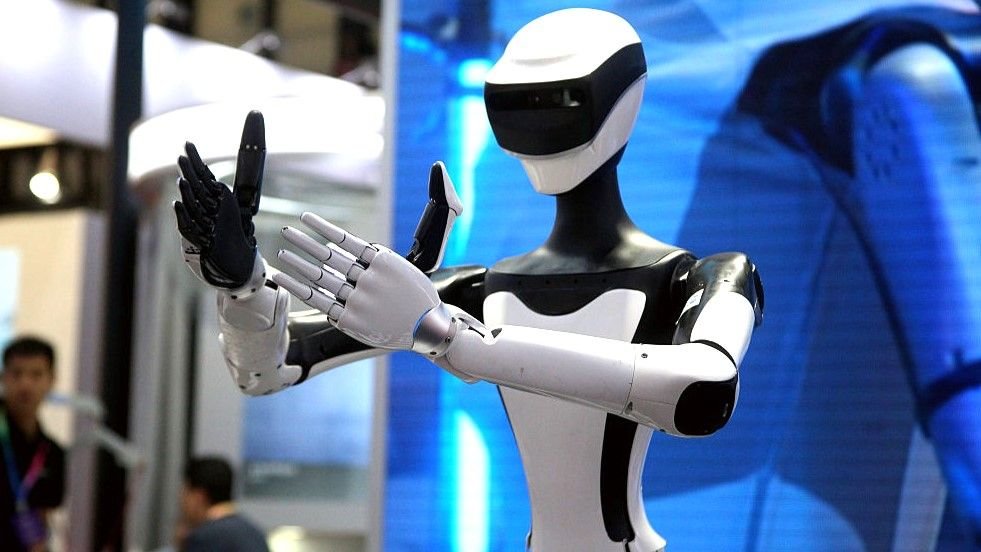
When British YouTuber and engineer James Bruton decided to build a towering, walkable robot inspired by Star Wars, practicality was never the point. The goal, he admits cheerfully, was to make something irresistible—something huge, strange, and cinematic enough that people simply had to click on the video. What he settled on was an AT-AT, the four-legged imperial walker made famous in The Empire Strikes Back. Better still, Bruton planned not just to build it, but to ride it around his friend’s tennis court.
Behind the playful ambition, however, lay a serious engineering challenge. An AT-AT is only impressive if it walks convincingly. That meant designing four powerful, coordinated legs capable of bearing weight, staying balanced, and responding precisely to control inputs. Bruton was adamant that he didn’t want a machine that merely lurched forward like a drunken giant. “I don’t want something that’s massive and wobbly,” he said. The walker needed control, stability, and—at least to some extent—grace.
To achieve that, Bruton devised an intricate network of motors, gears, and custom-built components designed to behave like servos—mechanisms whose position can be constantly measured, adjusted, and corrected. This allowed each joint in the robot’s legs to move in a controlled, predictable way. Once the build was complete, Bruton filmed himself dressed as a Stormtrooper, perched atop the lumbering machine as it crept across the court. The final result was undeniably charming, if not especially fast. “It’s pretty slow,” he admitted, laughing.
That experiment was only the beginning. Bruton has since turned his attention to an even more demanding challenge: a two-legged, rideable robot. Unlike a four-legged walker, a biped has no inherent static stability. To avoid toppling over, it needs lightning-fast reactions, exquisitely sensitive control systems, and legs that can respond instantly to changes in balance. Carrying a human rider only makes the problem harder.
Some of the components Bruton designs behave less like traditional motors and more like “variable springs.” These elements can reverse direction, absorb impacts, and dynamically adjust to changing loads—softening the blow when a foot strikes the ground, for example. “It can dynamically absorb load as you need it to,” he explains. In other words, the machine doesn’t just move; it reacts.
At the heart of this challenge lies a deceptively simple question: what does it actually take to bring a robot to life?
The Hidden Importance of Actuators
Every robot, from a factory arm to a humanoid assistant, depends on actuators—the components that turn electrical, pneumatic, or hydraulic energy into movement. Broadly speaking, actuators either move linearly (pushing in and out) or rotate around an axis. By combining them with mechanical structures—joints, limbs, frames—engineers can build everything from robot dogs to surgical tools to humanoids.
As robots grow more complex and more integrated into human environments, the demands placed on actuators increase dramatically. They must be powerful yet efficient, precise yet robust, and increasingly intelligent. Despite decades of progress, today’s actuators still fall far short of the biological gold standard: muscle.
Animals move with astonishing efficiency, adaptability, and elegance. Muscles don’t just contract; they store and release energy, absorb shocks, adjust stiffness on the fly, and provide rich sensory feedback. Replicating even a fraction of that capability in artificial systems is extraordinarily difficult.
Only a relatively small number of companies today can manufacture high-precision actuators at scale, and even the best of them produce components that are bulky, rigid, and energy-hungry compared with their biological counterparts. The result is that many robots still move awkwardly—jerky, stiff, and unmistakably mechanical.
A new generation of actuators, researchers hope, could change that. If successful, it might allow robots to transition from clanking, stumbling machines into something closer to mechanical dancers—systems capable of smooth, responsive, almost balletic motion.
Why Traditional Motors Fall Short
For decades, roboticists have relied heavily on direct current (DC) motors to generate movement. According to Mike Tolley, a roboticist at the University of California, San Diego, these motors are excellent at certain tasks. “If you want to spin a fan, for example, they’re great,” he explains. DC motors perform well at high rotational speeds and relatively low torque.
Torque, in simple terms, is a measure of twisting force—the kind that lets you turn a wheel, lift an object, or push against resistance. And this is where the problem lies. Human movement is all about torque. We lift, pull, shove, brace, and resist. We don’t move like fans.
“When humans move, we want to be able to lift things, push things, and interact with the world in ways that require a lot of force,” Tolley says. Traditional motors can generate that force, but often only by pairing them with heavy gear reductions, which introduce friction, stiffness, and delay.
Safety is another critical concern. Imagine a robot arm swinging toward you. Ideally, you should be able to stop it instantly with your hand, pushing it away without injury. That requires what engineers call “back-driveability”—the ability for a force applied externally to reverse the actuator’s motion. Many conventional actuators lack this capability. They behave more like manual transmission cars stuck in forward gear: once moving, they resist being pushed back.
Energy efficiency is yet another stumbling block. “Another problem with today’s robots is they rapidly run out of batteries,” says Jenny Read, programme director for robot dexterity at the UK’s Advanced Research and Invention Agency (ARIA). “Electric motors are terrible at that.” As robots shrink, the issue becomes even more severe. Small motors tend to overheat, wasting energy and limiting performance.
Industry Scrambles for Better Solutions
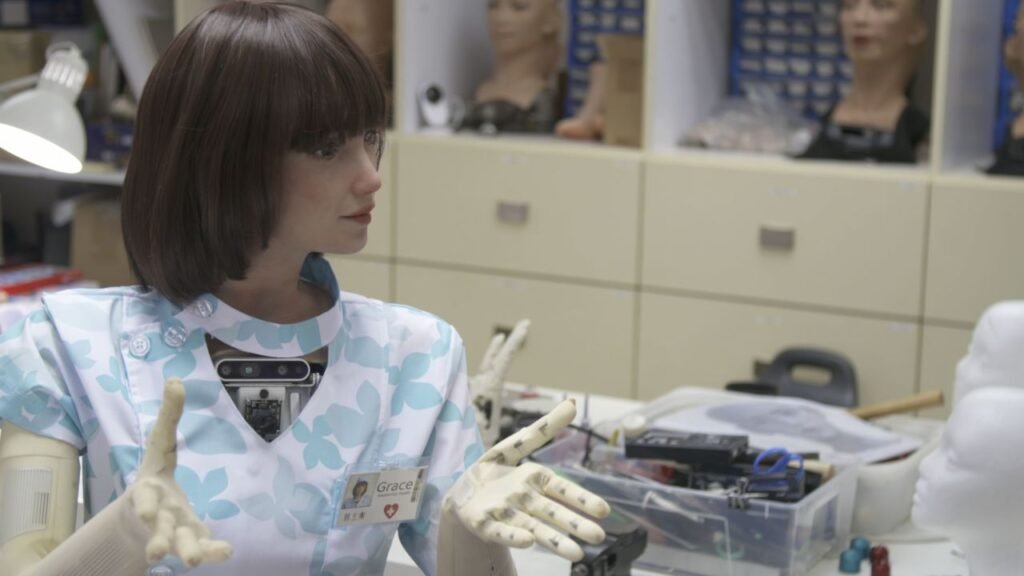
To overcome these limitations, companies and researchers around the world are experimenting with new actuator designs and materials. German engineering firm Schaeffler, for example, is collaborating with British robotics company Humanoid to develop actuators tailored for bipedal robots that must operate safely alongside humans.
The goal is to create components that combine high energy efficiency with fine-grained control. This is especially important for humanoids, which must constantly adjust their balance while walking, lifting, or manipulating objects. Part of the solution lies in data. Modern actuators are being designed to stream detailed information about their position, load, and performance back to onboard computers, enabling real-time adjustments.
But software alone isn’t enough. “We have to try and test to find this optimisation of friction, of back-driveability,” says David Kehr, president of humanoid robotics at Schaeffler. “It’s really a big puzzle.”
Schaeffler hopes to deploy robots in its own factories, where they could handle repetitive tasks such as loading freshly manufactured parts from conveyor belts into washing machines before packaging. With labor shortages already affecting industrial operations, Kehr sees robots as a necessary supplement—not a replacement—for human workers. He insists that employees displaced from such tasks would be retrained for other roles.
Meanwhile, Boston Dynamics, one of the world’s most prominent robotics companies, has partnered with South Korean automotive supplier Hyundai Mobis to develop a new generation of actuators. These components resemble electric power steering systems found in cars, combining motors, controllers, and reduction gears into compact, reliable units.
“The quality and reliability is very important for human safety,” says Se Uk Oh, vice president leading the robotics division at Hyundai Mobis. The company’s experience in automotive safety, he notes, gives it an edge as robots move closer to everyday human environments.
Softer, Stranger Futures
Despite these advances, most state-of-the-art actuators are still built from familiar ingredients: metal, hard plastics, and electronics. But some researchers believe the future of graceful movement lies in something radically different.
Tolley and his colleagues have been exploring soft robotics—machines made from flexible materials and powered by air rather than electricity. Some of their robots can walk on land and then continue moving underwater without concern for moisture or electronics shorting out. In one striking example, a six-legged robot with no onboard electronics at all begins walking simply when air is pumped through a tube.
To demonstrate their durability, Tolley’s team once drove a car over one of these soft robots. It survived. “We wanted to show it was soft and squishy enough,” he says. “It can really suffer a lot of different abuses.”
ARIA is also funding research into actuators made from elastomers—stretchy, rubber-like materials that can contract and expand when voltage is applied. These systems behave in some ways like biological muscle, storing and releasing energy rather than rigidly forcing movement.
The idea isn’t new, Read acknowledges. Elastomer-based actuators have been studied for years without yet triggering a revolution. “Often with these technologies, you have to keep pushing,” she says.
Toward Grace
The long-term ambition driving all of this research is deceptively simple: to make robots move better. Not just faster or stronger, but more naturally. More gracefully.
“Robots today have this clunkiness and heaviness,” Read says, “which is so different from the way we move.” Overcoming that gap will require breakthroughs in materials, mechanics, control systems, and energy storage. It may also require rethinking what robots are made of and how they interact with the world.
Whether it’s James Bruton’s Star Wars-inspired walker stomping across a tennis court, or a future humanoid carefully navigating a crowded factory floor, the challenge remains the same. Grace, it turns out, is one of the hardest things to engineer.