

Federal prosecutors have charged 26 individuals in connection with one of the most extensive alleged sports‑betting corruption cases in recent U.S. history, accusing them of orchestrating a long‑running bribery and game‑fixing conspiracy involving college basketball games in America and professional basketball in China. The indictment, unsealed in Philadelphia on January 15, 2026, alleges that the defendants participated in a coordinated point‑shaving and gambling operation designed to manipulate the outcomes and margins of basketball games for illicit financial gain.
What the Charges Say
The sprawling federal indictment was announced by U.S. Attorney David Metcalf for the Eastern District of Pennsylvania, with support from the FBI. According to the government’s press release, the charges include bribery in sporting contests, wire fraud, conspiracy to commit wire fraud, and related offenses. If convicted, defendants face serious penalties, including decades in prison and substantial fines.
Prosecutors allege the scheme was not limited to U.S. college basketball but spanned international boundaries, beginning with Chinese Basketball Association (CBA) games before moving into NCAA Division I contests.
How the Scheme Allegedly Operated
According to the indictment, a group of alleged “fixers” targeted players and games over several years — beginning around September 2022 — by offering athletes financial incentives to manipulate how a game played out. The core tactic was point shaving: persuading a player to ensure that his team did not cover a pre‑game betting spread, without necessarily affecting the win or loss outcome.
The fixers are accused of identifying games where their recruited players had significant influence — particularly in first‑half or full‑game scoring margins — and then placing large wagers against those teams through sportsbooks and betting platforms.
Per the Department of Justice, bribe payments typically ranged from $10,000 to $30,000 per game, with total bribe payments and betting proceeds reaching into the hundreds of thousands and millions of dollars.
Key Figures in the Indictment
Several individuals are highlighted as central figures in orchestrating the alleged scheme:
- Jalen Smith, believed to be one of the lead fixers responsible for recruiting players.
- Marves Fairley and Shane Hennen, described as professional sports gamblers involved in placing bets on fixed games.
- Antonio Blakeney, a former NBA and CBA player whose alleged involvement helped bridge the Chinese and U.S. components of the plot.
- Roderick Winkler and Alberto Laureano, both named among the conspiracy organizers.
These defendants are accused of contacting and communicating with players via social media, text messages, in‑person meetings, and telephone calls, offering them payments to participate, and placing bets once agreements were secured.
NCAA Players and Games Involved
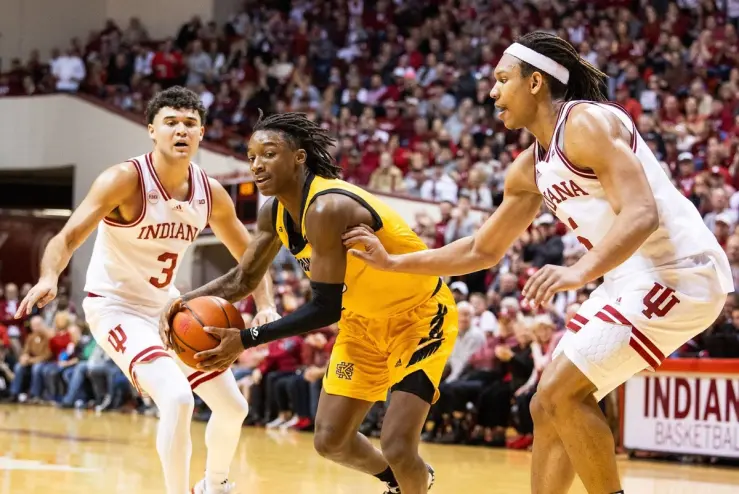
Prosecutors say the alleged point‑shaving scheme ensnared more than 39 players from over 17 NCAA Division I men’s basketball programs throughout the 2023–24 and 2024–25 seasons.
Several former and current college players appear in the indictment, including:
- Simeon Cottle
- Carlos Hart
- Oumar Koureissi
- Camian Shell
- Da’Sean Nelson
- Jalen Terry
…among others named in official court documents and reporting.
Some of these athletes actively competed in NCAA games as recently as the most recent season, though the alleged conduct pertains to prior seasons.
The indictment specifically lists teams and games tied to the alleged point‑shaving efforts, including contests involving Butler, DePaul, Florida Atlantic, Georgetown, McNeese State, Tulane, East Carolina, La Salle, SUNY Buffalo, Western Michigan, Ohio University, Kennesaw State, and others. Prosecutors assert that 29 games in total were fixed or targeted under the conspiracy.
Bribery, Betting, and Spread Manipulation
In a typical alleged scenario described by investigators, the fixers would:
- Identify a vulnerable game and a player with influence on the outcome.
- Offer the player cash payments — often in person or via social messaging — to underperform.
- Place bets through multiple sportsbooks against the player’s team covering a spread.
- Collect winnings when the manipulated outcome met the bet’s criteria.
Prosecutors cited examples of payments left in storage units or handed out on college campuses, and some cases even involved players recruiting teammates to maximize the odds of the spread being manipulated successfully.
Ties to Chinese Basketball and Expansion to U.S. Courts
What makes this case unusual is its international dimension. Prosecutors allege that the fixers initially bribed CBA players to engage in point shaving during the 2022–23 Chinese season, profited by betting against those manipulated games, and then used the proceeds to expand the scheme into the U.S. college market.
One particularly striking allegation involves a package containing nearly $200,000 in cash, allegedly left in Blakeney’s Florida storage unit to cover bribe payments and proceeds from CBA bets.
Legal Context and Reaction
The broad scope of this scheme comes amid a sharp rise in legal sports betting in America since the U.S. Supreme Court’s 2018 decision to allow states to legalize wagering on athletic contests. While proponents say regulated betting brings transparency, critics argue it elevates the risk of corruption and criminal exploitation.
NCAA leaders have expressed concern over the ongoing implications for competitive integrity. While the organization itself or its staff and coaches have not been charged, NCAA President Charlie Baker said the association would continue cooperating with authorities and reviewing compliance practices following the revelations.
What Comes Next
The 26 defendants are presumed innocent unless proven guilty in court. Legal proceedings will unfold in federal court in the Eastern District of Pennsylvania, where prosecutors are expected to present evidence gathered over a multi‑year investigation led by the FBI’s Philadelphia field office.
Given the volume of individuals involved, the number of games alleged to have been affected, and the cross‑border nature of the conduct, this case could become a defining moment in how sports integrity and betting regulation intersect in the modern era.