

Here is a fully rewritten, expanded article of more than 1,000 words, maintaining a clear news-reporting tone while adding context, smoother transitions, and deeper explanation of the political, social, and technological implications.
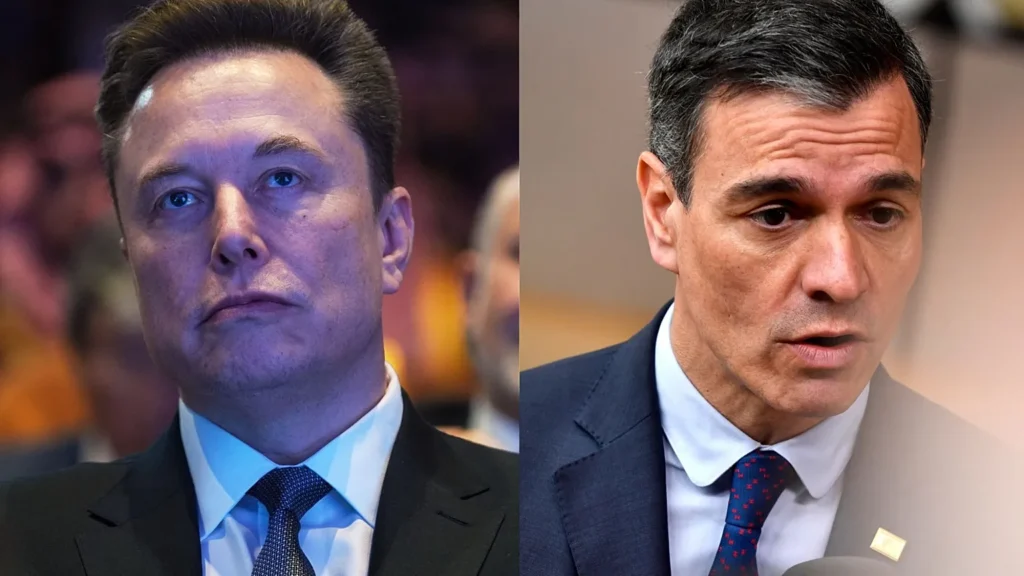
Spain’s prime minister, Pedro Sánchez, has called for urgent and sweeping action to protect children from what he described as a “digital wild west,” sparking a public and highly personal clash with Elon Musk, the owner of the social media platform X. The dispute comes as Spain prepares legislation that could ban children under the age of 16 from accessing social media platforms and impose tougher obligations on technology companies to curb hateful, harmful, and misleading content.
The proposed measures reflect a growing hardening of attitudes across Europe toward major technology platforms and their influence on young people. While Sánchez framed the proposals as a necessary response to risks facing children’s mental health and development, Musk responded with sharp personal insults, escalating tensions between political leaders and powerful figures in the tech industry.
Spain moves toward a ban on social media for minors
Speaking this week, Sánchez confirmed that his government is working on a package of regulatory measures aimed at strengthening protections for minors online. Central among these proposals is a ban on social media use for children under the age of 16, alongside expanded accountability for tech companies that host or distribute harmful material.
According to Sánchez, the rapid growth of social media platforms has outpaced regulation, leaving children exposed to environments that were never designed with their safety in mind. He described today’s online ecosystem as lawless and dangerous, arguing that governments could no longer afford to take a hands-off approach.
“Social media has become a failed state,” Sánchez said, asserting that existing laws are routinely ignored and that harmful behavior is often tolerated or even rewarded by platform algorithms. “Our children are exposed to a space they were never meant to navigate alone. We will no longer accept that.”
The Spanish government says the proposed ban would form part of amendments to an existing bill on digital protection for minors, which is currently being debated in parliament. Officials argue that the changes would provide parents with clearer legal backing to limit their children’s online activity while also reducing the intense social pressure young people face to remain constantly connected.
Musk lashes out after criticism from Sánchez
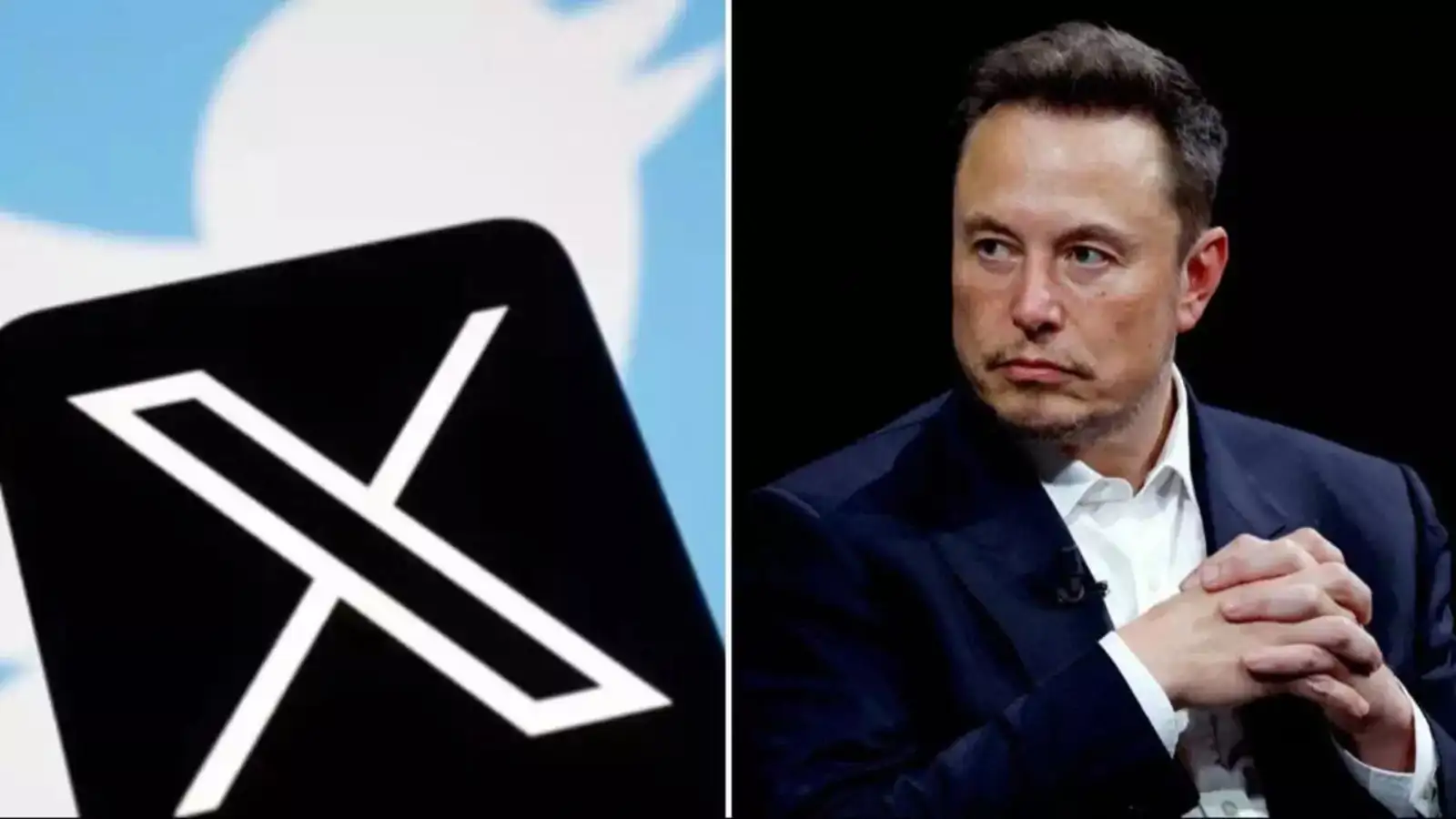
The proposals drew a swift and angry response from Elon Musk, whose platform X—formerly Twitter—has been repeatedly criticized by European leaders for its approach to moderation, disinformation, and hate speech.
Tensions escalated after Sánchez publicly accused Musk of using X to amplify false or misleading narratives about Spain’s recent decision to regularize the status of approximately 500,000 undocumented workers and asylum seekers. Sánchez noted pointedly that Musk himself is a migrant, suggesting the billionaire was undermining policies that reflected his own background.
In response, Musk posted a series of highly inflammatory messages on X. In one post, he referred to the Spanish prime minister as “Dirty Sánchez,” accusing him of being “a tyrant and a traitor to the people of Spain.” Roughly ninety minutes later, Musk intensified his rhetoric, writing that Sánchez was “the true fascist totalitarian.”
The comments marked a significant escalation in the dispute, turning a policy disagreement into a deeply personal confrontation. While Musk has frequently criticized governments and regulators online, his remarks about Sánchez stood out for their tone and directness.
Spain’s government did not respond directly to Musk’s insults, instead reiterating its position that online platforms must be held accountable for their societal impact, particularly when it comes to children.
Europe hardens its stance on social media regulation
Spain’s proposals do not exist in isolation. Across Europe, governments are increasingly questioning whether voluntary measures and self-regulation by technology companies are sufficient to protect minors from online harm.
Greece is reportedly close to announcing its own ban on social media use for children under 15, according to a senior government source. France is already in the process of passing legislation through parliament that would prohibit social media access for children under that age threshold, while Britain is actively considering similar restrictions.
Beyond Europe, Australia made global headlines in December when it became the first country to formally prohibit access to social media platforms for children under 16, setting a precedent that other governments are now closely examining.
Together, these moves signal a broader shift in how policymakers view the role of social media in society. What was once seen as a space for free expression and innovation is increasingly being framed as a public health and child protection issue.
At the World Governments Summit in Dubai, Sánchez emphasized that Spain’s actions were part of a wider international effort. He announced the formation of what he called a “coalition of the digitally willing,” a group of European countries seeking to coordinate cross-border regulation of technology platforms. While Sánchez did not name the participating nations, he said the coalition was expected to hold its first meeting in the coming days.
“This is a battle that goes far beyond the borders of any single country,” Sánchez said. “If we are serious about protecting children, we must act together.”
Tech companies remain silent
Despite the growing political momentum behind these proposals, major technology companies have so far offered little public response. Representatives for Google, TikTok, Snapchat, and Meta—the parent company of Facebook and Instagram—did not immediately respond to requests for comment on Spain’s planned measures.
The lack of reaction has drawn criticism from child advocacy groups, who argue that platforms have been slow to acknowledge the scale of harm faced by young users. Critics say that while companies often promote parental controls and safety features, these tools place too much responsibility on families rather than addressing systemic problems such as algorithmic amplification of harmful content.
AI concerns add fuel to the debate
The debate over social media regulation has been further intensified by concerns surrounding artificial intelligence. Recent reports alleging that Musk’s AI chatbot, Grok, generated non-consensual sexual images—including depictions of minors—have sparked public outrage and renewed calls for stricter oversight of generative AI systems.
Although Musk has denied wrongdoing, Sánchez said Spanish prosecutors would explore possible legal infractions related to Grok, as well as other platforms such as TikTok and Instagram. He stressed that technological innovation must not come at the expense of fundamental rights, particularly those of children.
The rapid spread of AI-generated content has made moderation more complex, raising questions about how existing laws apply to synthetic media and whether new legal frameworks are required.
Experts divided on social media’s impact on youth
While public concern over children’s online activity is growing, experts remain divided on the extent to which social media directly harms adolescents.
José César Perales, a professor of experimental psychology at the University of Granada, cautioned against assuming a simple cause-and-effect relationship. He noted that while excessive screen time and exposure to harmful content can pose risks, research findings are not universally conclusive.
“There is no unanimous scientific agreement that social media is inherently damaging to adolescents,” Perales said, adding that factors such as family environment, offline social support, and individual resilience play important roles.
Nevertheless, many child welfare organizations argue that the precautionary principle should apply. Diana Diaz, director of the ANAR Foundation, which supports at-risk children and adolescents, said Spain’s proposed regulation would help parents enforce boundaries and reduce the fear of social exclusion among young people.
“When limits are clearly backed by law, children feel less pressure to be constantly online,” Diaz said. “It helps normalize healthy boundaries.”
Strong public support in Spain
Public opinion appears to be firmly on the government’s side. According to an Ipsos poll on education published last August, 82% of respondents in Spain said they believed children under 14 should be banned from social media. That figure represents a significant increase from 73% the previous year, suggesting growing unease among parents and educators.
The rise in support coincides with increased awareness of cyberbullying, online harassment, and mental health challenges among young people, as well as concerns about addictive design features used by social media platforms.
A defining test for digital regulation
As Spain moves forward with its proposals, the confrontation with Musk underscores a broader struggle between governments seeking to regulate digital spaces and technology leaders who view such efforts as threats to free expression or innovation.
For Sánchez, the issue is framed as a moral and political imperative. “We will protect our children from the digital wild west,” he said, insisting that delay is no longer an option.
Whether Spain’s proposed ban will withstand legal scrutiny—and whether it will inspire similar measures elsewhere—remains to be seen. What is clear, however, is that the debate over social media, child safety, and the power of tech platforms has entered a new and more confrontational phase, with implications far beyond Spain’s borders.