



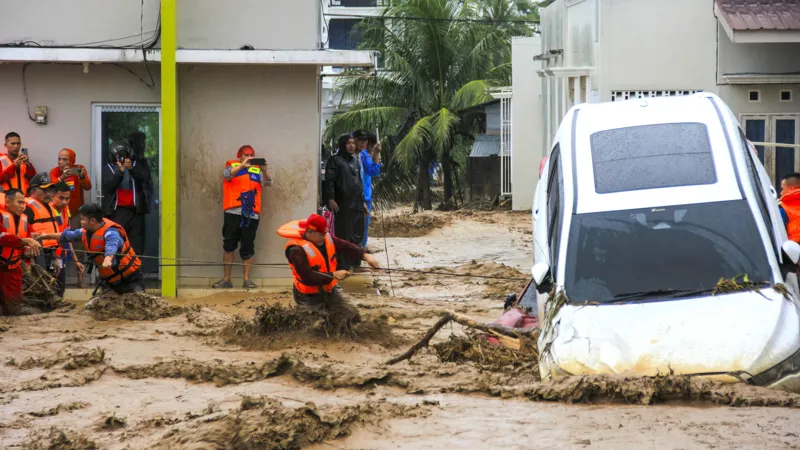
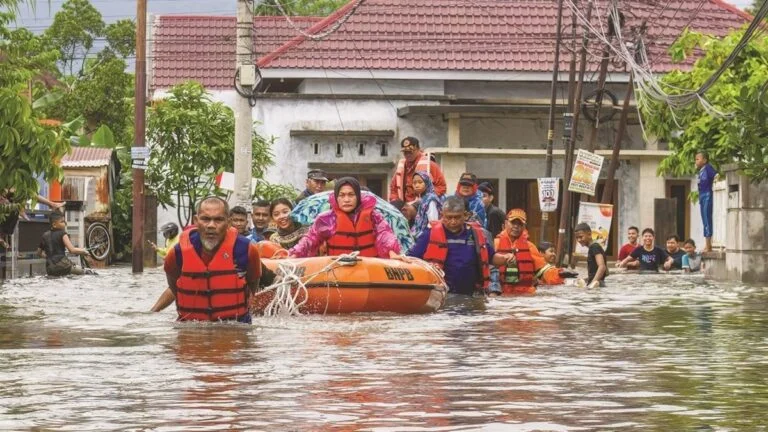
The catastrophic floods that hit Indonesia last week have now claimed over 500 lives, with rescue teams still struggling to reach many of the affected areas. The disaster, triggered by a rare cyclone over the Malacca Strait, has struck three provinces, impacting roughly 1.4 million people, according to Indonesia’s disaster management agency.
An additional 500 people remain missing, and thousands more have been injured. Indonesia is among several Asian countries facing severe weather in recent days, with Thailand, Malaysia, and Sri Lanka also reporting fatalities due to torrential rains and storms.
Hardest-Hit Areas
The provinces of Aceh, North Sumatra, and West Sumatra have been the worst affected, with thousands still isolated and lacking critical supplies. In Aceh’s Pidie Jaya Regency, resident Arini Amalia described the floodwaters as “like a tsunami,” noting that her grandmother called it the worst disaster she had ever experienced.
Aid workers are navigating flooded areas on foot and motorcycles, as many roads remain impassable to larger vehicles. Images from the region show washed-out bridges, roads covered in mud and debris, and logs piled high, highlighting the scale of the destruction.
At West Sumatra’s Twin Bridges, floodwaters deposited massive amounts of mud and debris. Resident Mariana watched as excavators cleared the area, desperately hoping to find her missing family, including her 15-year-old son. She said, “Watching the excavators, seeing how thick the mud is… I keep thinking, what condition will my child be in when they find him? My mother, my brother-in-law… maybe their faces won’t even be recognisable.”
Shortages and Struggles
Thousands of survivors are still waiting for food aid, with some going two to three days without eating. In Central Tapanuli, North Sumatra, resident Maysanti described the dire situation: “Everything is gone; our food supplies are running out. Even instant noodles are being fought over. Access to us is completely cut off.”
Basic necessities such as clean water and internet connectivity remain a challenge. In Central Aceh, authorities have provided Starlink devices, allowing thousands of residents to queue outside the regency office to contact loved ones or charge mobile phones. Resident Mar explained, “It’s been five days with no signal. I’m trying to reach my mother in Banda Aceh, but I still can’t contact her.”
Criticism of Disaster Response
As rescue operations continue, frustration has grown over the government’s disaster management. Critics argue that authorities were ill-prepared and that bureaucratic delays slowed food aid distribution.
President Prabowo Subianto, visiting flood-hit areas in North Sumatra, acknowledged that some roads remain inaccessible but reassured the public: “We’re doing everything we can to overcome difficulties. We face this disaster with resilience and solidarity. Our nation is strong and able to overcome this.”
Climate Context
Indonesia’s monsoon season, which typically runs from November to March, regularly brings heavy rainfall. While scientists caution that it is difficult to attribute individual extreme weather events to climate change, evidence suggests that climate change is making storms more frequent and intense, resulting in heavier rain, flash flooding, and stronger winds.